Quick Navigation
Toggle🚀 What Is AI and Why Beginners Should Learn It?
The technology that allows machines to understand, learn, and solve problems similarly to humans is known as artificial intelligence (AI). Everything around us is powered by AI these days, including Netflix recommendations, Google search suggestions, and intelligent assistants like Alexa. If you’re wondering how to learn AI skills for beginners, the journey starts with understanding how these systems work and why they matter.
AI is expanding at a breakneck pace, and businesses across all sectors want experts with a basic understanding of machine learning, generative AI, and AI literacy. In 2025, learning AI will become a life skill rather than merely a professional move. AI can change your future, whether you want to start a business, get a better career, or just keep current.
Beginners can now learn AI gradually without feeling overwhelmed as more tools and no-code platforms become available. All you need is a constant practice mentality, beginner-friendly courses, and the appropriate AI learning roadmap.
🧭 AI Learning Roadmap for Absolute Beginners (2025)
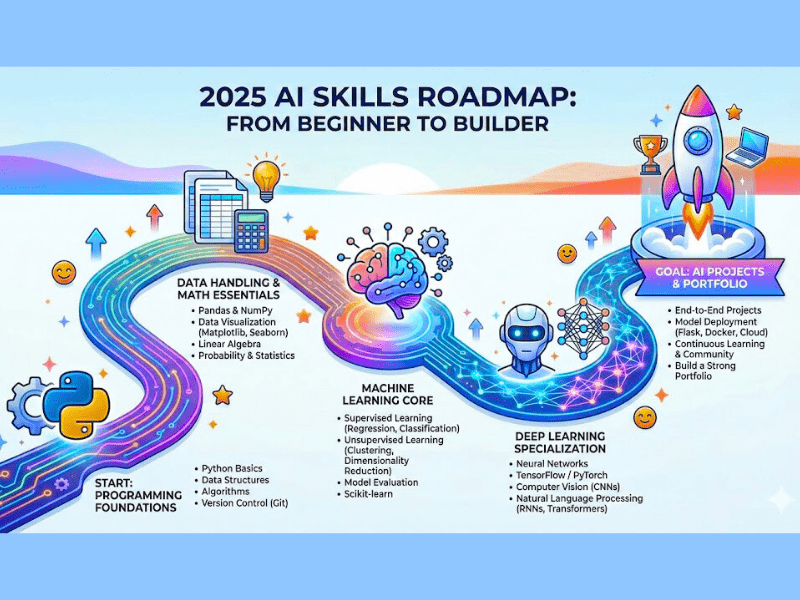
In 2025, the best way to master AI skills for beginners is to follow a clear and practical roadmap. The majority of novices become stuck because they don’t lay the proper foundation before diving into advanced machine learning or deep learning. You can avoid uncertainty, choose beginner-friendly courses, and advance confidently step-by-step with the aid of a strong AI Learning Roadmap.
Beginning Python programming, developing AI literacy, practicing data science principles, and creating small practical projects with Jupyter Notebooks and Google Colab are all included in this roadmap. Additionally, it directs you toward practical uses of generative AI concepts, no-code AI tools, and open-source libraries.
Experts are no longer the only ones who can learn AI. Anyone can begin the journey, even without a technical background, thanks to MOOCs, free online tutorials, and self-paced learning choices. Combine practice-based assignments, portfolio development, and structured learning if you want to grow quickly.
This guarantees that you become prepared for the workforce and steer clear of “tutorial hell,” which ensnares a lot of novices. Understanding how to learn AI skills for beginners means following a consistent path, choosing the right resources, and focusing on practical knowledge over theory.
What Prerequisite Skills Do You Need?
You only need a few basic necessary skills—nothing complex or frightening—before you start learning AI step-by-step. It is more than sufficient to begin with a basic understanding of Python programming, comfort with logical reasoning, and basic statistical reasoning. Additionally, you should know how to explore beginner-friendly courses, use the internet for self-paced study, and comprehend basic datasets (Excel or Sheets is sufficient).
These abilities aid in your comprehension of important ideas such as conceptual understanding, data science principles, and machine learning basics. The AI learning roadmap is made to help you progressively advance even if you’re a total novice. This is exactly how to learn AI skills for beginners without feeling overwhelmed.
Self-Paced Learning vs Structured Courses
One important dilemma that comes up when deciding how to learn AI skills for beginners is whether to take structured classes or self-paced learning. Depending on your personality, both work well.
You have complete flexibility when learning at your own speed. MOOCs, free online tutorials, AI literacy videos, and practical projects allow you to learn at your own pace. It’s ideal if you like playing with open-source libraries, no-code AI tools, and Google Colab.
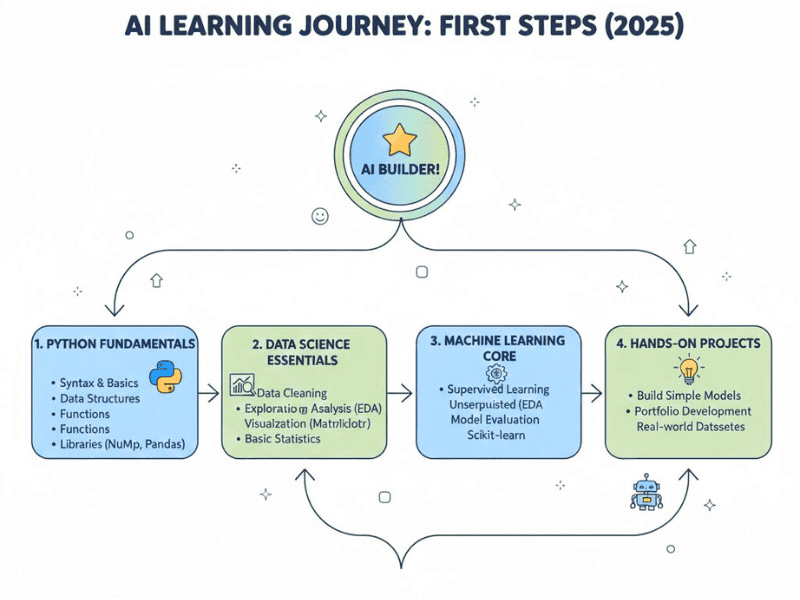
Conversely, structured courses provide a guided AI learning roadmap with a defined order: Python fundamentals → machine learning fundamentals → introduction to deep learning → practical applications.
Combining both helps you avoid tutorial hell and ensures consistent progress in mastering how to learn AI skills for beginners.
🎓 Best Beginner-Friendly Courses & Free Resources
Finding the best beginner-friendly courses is essential for anyone trying to understand how to learn AI skills for beginners in a structured and stress-free way.
In 2025, mastering generative AI principles, machine learning fundamentals, and AI literacy won’t require costly degrees. Numerous self-paced learning platforms, MOOCs, and free online tutorials are available that are tailored to complete beginners.
A solid AI learning roadmap combines exposure to real-world applications, project-based learning, and theoretical understanding. Because of this, choose beginner-friendly courses is crucial. They assist you in developing your Python programming abilities, learning the principles of data science, practicing with Jupyter Notebooks, and investigating open-source libraries such as PyTorch and TensorFlow.
Most significantly, you can build confidence by using these free learning routes before going on to more complex subjects like statistical reasoning or deep learning introduction. Beginners who begin with well-organized, excellent tutorials learn more quickly, stay motivated, and avoid confusion. This is one of the smartest ways to master the foundations and understand how to learn AI skills for beginners step by step.
Free Online Tutorials & MOOCs
Because they provide structured learning at no cost, free MOOCs are the ideal place for beginners to start learning AI. Tutorials on anything from Python fundamentals to AI literacy, machine learning fundamentals, conceptual understanding, and generative AI concepts may be found on sites like Coursera, edX, Udacity, and YouTube channels.
Beginner-friendly explanations, tests, self-paced learning modules, and real-world examples are all included in these courses. Additionally, you will learn how to use crucial technologies like Jupyter Notebooks and Google Colab.
Before beginning practical activities, free lessons are perfect for developing prerequisite skills and comprehending the AI skills roadmap. They provide you with the self-assurance to begin experimenting with no-code AI tools, working with datasets, and practicing AI technologies.
Hands-on Projects for Learning Faster
For novices in particular, practical projects are the quickest method to translate theory into useful skills. You really create small solutions utilizing AI tools, data science principles, and machine learning concepts rather to only watching videos.
Start with easy tasks like sentiment analysis, image categorization, data cleansing, or using no-code AI technologies to create chatbots. Jupyter Notebooks, Google Colab, open-source libraries, and practical applications are all introduced to you through these projects.
Your conceptual knowledge is strengthened and “tutorial hell” is eliminated when you work on practical activities. Additionally, it gets you ready for portfolio building, which is crucial for being prepared for a job. Practical experience guarantees that your learning trajectory remains steady and facilitates your seamless advancement along the AI learning roadmap.
🧠 Core Skills Every Beginner Must Learn
You must establish a solid foundation in a few fundamental core skills in order to fully comprehend how to learn AI skills for beginners. These abilities make everything else much simpler to understand, including the fundamentals of machine learning, an introduction to deep learning, generative AI principles, and practical applications. Without these fundamentals, the majority of students experience “tutorial hell” or become overwhelmed by complicated algebra and algorithms.
The good news? Advanced technical knowledge is not required. All you need is rudimentary knowledge of data science, basic statistical reasoning, and Python programming. These provide you with the theoretical knowledge required to investigate AI literacy and operate with confidence using tools such as Google Colab, Jupyter Notebooks, TensorFlow, PyTorch, and even no-code AI technologies.
The foundation of any successful AI learning roadmap is the gradual acquisition of these fundamental skills. You will soon grasp how to learn AI skills for beginners in a useful and stress-free manner if you adhere to these principles constantly.
Python Programming (Beginner Level)
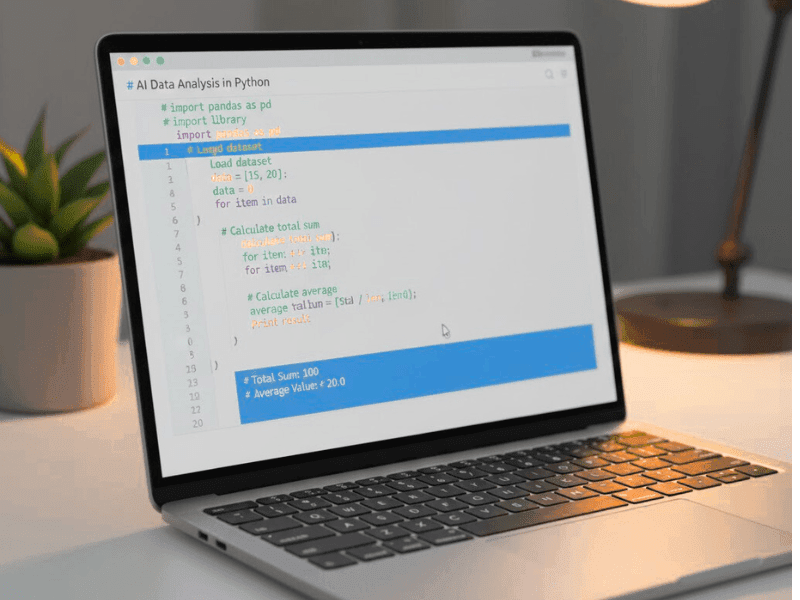
Python is the most user-friendly programming language for novices and the foundation of artificial intelligence. Basic Python programming is sufficient to get started; you don’t need to be a programmer. Pay attention to basic ideas such as reading CSV files, loops, variables, lists, and functions.
You can start using open-source libraries like NumPy, Pandas, and Matplotlib after mastering these fundamentals. You may prepare data for machine learning projects, conduct data analysis, and examine datasets with the use of these tools.
You will gain confidence by studying Python through free online tutorials, beginner-friendly courses, or self-paced learning platforms. Additionally, it gets you ready for practical experience in Google Colab and Jupyter Notebooks, where the majority of AI activities are performed. Python is the first step in understanding how to learn AI skills for beginners.
Data Science Fundamentals & Statistical Thinking
Fundamentals of data science help you comprehend how data functions, why it matters, and how machines can learn from it. Start with the fundamentals, such as using spreadsheets, cleansing data, and visualizing data.
Next, become familiar with basic statistical concepts such as probability, correlations, mean, median, standard deviation, and basic distributions. These ideas are crucial for conceptual comprehension and the fundamentals of machine learning.
These concepts are simple to put into practice with the help of programs like Pandas, Excel, and Google Sheets. It is simpler to train models, assess performance, and work on practical tasks once you comprehend data patterns. These principles are essential to any AI learning roadmap and facilitate your progress as a novice.
Machine Learning Basics & Conceptual Understanding
Initially, machine learning doesn’t require a lot of arithmetic. Learn about concepts such as models, accuracy, training and testing data, supervised and unsupervised learning, and so on.
Examine algorithms that are suitable for beginners, such as KNN, decision trees, and linear regression. Use open-source libraries like Scikit-Learn and Google Colab to practice them.
You may create practical applications such as price prediction, spam detection, or basic categorization jobs with this conceptual understanding. Additionally, it gets you ready for the introduction of deep learning and generative AI principles later on.
With the right learning path, machine learning becomes simple, logical, and enjoyable—making it a crucial part of how to learn AI skills for beginners.
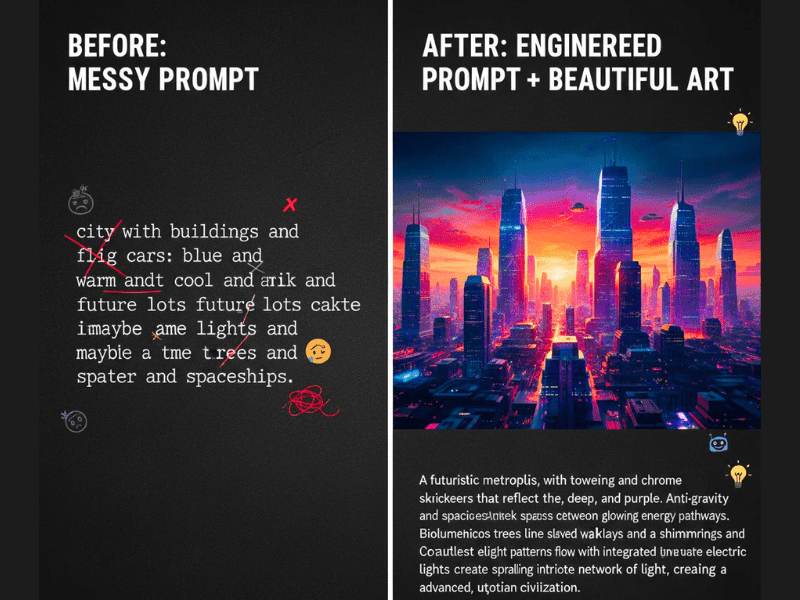
🤖 Generative AI & Prompt Engineering for Starters
Generative AI has become the easiest entry point for anyone wondering how to learn AI skills for beginners without feeling overwhelmed by coding or complex theory. Beginners can experiment and quickly create real-world apps with technologies like ChatGPT, Midjourney, Claude, Gemini, Runway, and no-code AI tools.
Understanding how AI models respond, think, and produce information is made easier with prompt engineering. Additionally, it increases your confidence, enhances your AI literacy, and gets you ready for more complex subjects like conceptual comprehension, data science principles, and machine learning basics.
One of the AI learning roadmap‘s fastest-growing paths in 2025 is generative AI, where you may explore useful workflows, create small projects, and escape tutorial hell by learning it early. That’s why many experts recommend prompt engineering as a starting point for how to learn AI skills for beginners.
Why Prompt Engineering Is Perfect for Beginners
Because it doesn’t require prior knowledge of data science or Python programming, prompt engineering is ideal for novices. All you have to do is use explicit instructions to learn how to interact with AI models.
It fosters the growth of logical reasoning, creativity, and problem-solving abilities, all of which are necessary for the fundamentals of machine learning and generative AI. Additionally, prompt engineering serves as a starting point for comprehending practical applications like text production, data analysis, idea development, and automation with no-code AI technologies.
This skill is perfect for learners who want a basic introduction before delving deeper into AI tools and open-source libraries because it easily fits into the AI skills roadmap.
Simple Hands-on Ideas for Practice
Small, enjoyable, and useful quick engineering activities are a good place for beginners to start. For instance:
Create study summaries using ChatGPT
Generate images with Midjourney or DALL·E
Build simple workflows using no-code AI tools
Ask AI to analyze small datasets (CSV or Excel)
Create chatbot-style responses in Google Colab
These small tasks improve your conceptual understanding while exposing you to practical applications. You’ll discover how AI models function, how to enhance results, and how to come up with original solutions to issues.
Hands-on practice also prepares you for portfolio building and helps you understand how to learn AI skills for beginners in a practical, engaging way.
🧑💻 Tools You Must Learn to Practice AI Skills
When figuring out how to learn AI skills for beginners, it’s crucial to understand the appropriate tools because they influence your learning pace and practical capabilities. These user-friendly platforms facilitate practice, experimentation, and project development, regardless of your interest in machine learning, data science, or generative AI.
You can follow a defined learning roadmap, gain technical confidence, and comprehend actual AI workflows by regularly using these tools. To gain practical experience, anyone looking into acquiring AI abilities for beginners could start with interactive coding platforms, machine learning frameworks, and basic no-code tools.
This combination accelerates progress and makes learning AI more structured and practical. For anyone serious about how to learn AI skills for beginners, mastering these tools early creates a strong foundation.
Jupyter Notebooks & Google Colab
Jupyter Notebooks and Google Colab are essential platforms for anyone exploring how to learn AI skills for beginners. They provide an interactive environment where you can test algorithms, write Python code, view datasets, and record your work all in one location.
Because Google Colab offers free GPU access, it is particularly user-friendly for machine learning applications and deep learning research. Python-based AI libraries including Pandas, NumPy, TensorFlow, and PyTorch are supported by both tools.
Tutorials, code modification, and step-by-step learning are simple for beginners. By enabling you to explore, debug, and create your initial projects without installing anything on your PC, these platforms streamline the entire AI learning process.
TensorFlow, PyTorch & No-Code AI Tools
Tutorials, code modification, and step-by-step learning are simple for beginners. By enabling you to explore, debug, and create your initial projects without installing anything on your PC, these platforms streamline the entire AI learning process.
You can investigate neural networks, computer vision, natural language processing, and model training with these frameworks. No-code AI solutions like Teachable Machine, Lobe AI, and Runway ML are excellent substitutes if you initially find coding challenging.
They enable you to create basic AI apps, train models, and categorize photos without knowing how to write code. Beginners can acquire confidence and make a seamless transition into AI with the help of this combination of code-based and no-code solutions.
AI Tools for Data Analysis
Data analysis is the starting point of every AI project, and learning these tools is essential for anyone researching how to learn AI skills for beginners. Beginners may clean data, analyze datasets, and visualize findings with the use of tools like Pandas, NumPy, Tableau, Power BI, and Google Data Studio.
You may learn how to manage real-world data, spot trends, and get data ready for machine learning models with these tools. Logical reasoning and problem-solving abilities are also enhanced by Python-based data analysis libraries. Through consistent use of these tools, novices get a strong grasp of how data powers all AI systems and lay the groundwork for more complex AI learning.
📁 Building Your Portfolio with Real-World Applications
Building a strong portfolio is one of the most effective ways to understand how to learn AI skills for beginners, because practical work shows real progress beyond theory.
Your ability to apply AI ideas to practical tasks like data cleaning, prediction modeling, automation, or generative AI content production is demonstrated by your portfolio. Even tiny hands-on efforts are valued by employers, clients, and internet platforms.
Developing practical applications—whether through machine learning mini-projects, Python scripts, or no-code AI tools helps you gain confidence and provide a clear learning roadmap.
Additionally, it facilitates the demonstration of your creativity, problem-solving skills, and comprehension of basic AI operations. For anyone researching how to learn AI skills for beginners, starting with simple projects is the best long-term strategy.
Mini Projects for Beginners
The simplest way for novices to get started with real-world AI development is through small initiatives. Begin with basic data science activities like creating a simple recommendation system, analyzing CSV files, or using Pandas and Matplotlib to visualize trends. Additionally, you can use Teachable Machine or PyTorch lessons to investigate machine learning mini-projects such as picture categorization, spam detection, and student score prediction.
Try developing ChatGPT-based tools, writing assistants, visual prompts, or simple chatbot workflows for generative AI. These introductory assignments increase your fundamental abilities, enhance your decision-making, and help you comprehend how AI systems operate. Your AI portfolio gains useful value with every project.
How to Showcase Skills the Right Way
Correctly showcasing your abilities is just as crucial as developing them. Add thorough documentation, screenshots, sample outputs, and explanations of the lessons you learned when you upload your projects to GitHub or Google Drive. To publicly showcase your work, post your projects on Kaggle, LinkedIn, or your own blogs.
Additionally, you should write brief case studies outlining your strategy, the resources you employed, the difficulties you encountered, and the outcomes you achieved. This exhibits logical reasoning, practical comprehension, and rudimentary AI skills. A neat, well-structured portfolio makes you stand out and demonstrates your ability to use AI concepts successfully.
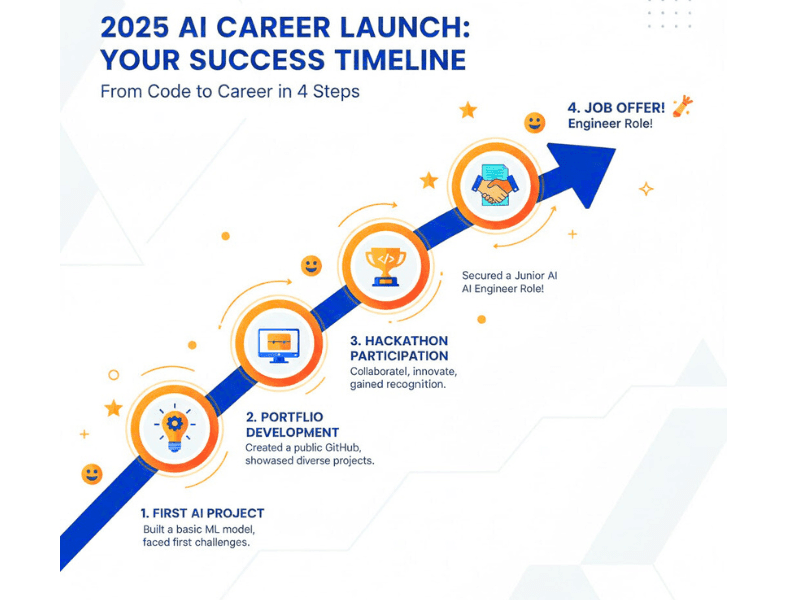
🚀 Career Kickstart: Path to High-Demand AI Job Roles
Knowing how to learn AI skills for beginners in an organized and useful method makes it much easier to begin a career in AI. Companies increasingly hire novices who can show that they have practical AI knowledge, genuine problem-solving skills, and a firm grasp of key tools like Jupyter Notebooks, TensorFlow, and no-code AI platforms.
Your objective is to become sufficiently prepared for the workforce to confidently apply for high-demand AI positions, such as prompt engineer, data analyst trainee, AI assistant creator, machine learning intern, or generative AI content specialist.
Here, skill validation is crucial. Your AI portfolio is strengthened by Kaggle contributions, GitHub mini projects, and certifications from beginner-friendly courses. You naturally gain the confidence required to use your abilities in real-world situations when you combine constant learning with practical experience. You can avoid misunderstanding and maintain motivation during your AI career starting journey by knowing how to master AI skills for beginners with a clear path.
Job Readiness & Skill Validation
Demonstrating your ability to apply data science principles, machine learning principles, and AI literacy to real-world tasks is a sign of job preparedness. Employers want to see that you can think clearly, handle little difficulties, and pick things up quickly rather than expecting newbies to know everything.
Validate your skills through:
GitHub projects
Kaggle notebooks
Beginner-level certifications
LinkedIn skill badges
Small freelance tasks
These show your dedication to practical AI applications and your comprehension of the AI learning roadmap. When you apply for entry-level AI jobs, proper validation also boosts your confidence.
Avoiding Tutorial Hell & Staying Consistent
“Tutorial hell,” where you watch endless videos but never construct anything, is one of the major obstacles faced by novices. It’s easy to stop this cycle: learn → practice → build. As soon as you complete a lesson or tutorial, put it into practice with a small project.
Set modest weekly objectives, concentrate on practical experience, and monitor your development. To keep yourself interested, use short challenges, novice AI projects, and self-paced learning resources. It’s more important to show up every day for twenty minutes than to pursue lengthy, challenging lessons; consistency is more important than perfection. You continue to make steady progress toward your AI career with this approach.
🏁 Conclusion: Your Clear Path to Learning AI Successfully
Following a straightforward, methodical approach makes learning AI considerably simpler for total beginners. Everything begins to seem less daunting and more attainable once you know how to learn AI skills for beginners. You can lay the groundwork for long-term success by adhering to an AI Learning Roadmap, which starts with the fundamentals of Python, data science, and machine learning.
The quickest method to learn is through practical projects, no matter how small. They assist you in gaining self-assurance, enhancing comprehension, and producing practical applications that you can proudly display in your portfolio.
Self-paced learning platforms, free online tutorials, and beginner-friendly courses provide you flexibility while maintaining a steady pace. The secret is to practice a little, learn a little, and keep going even when things seem to be going slowly. Your entire journey becomes easier, more pleasurable, and much more successful when you have this mindset.
Understanding how to learn AI skills for beginners also helps you avoid confusion, stay motivated, and focus on what truly matters: building skills that solve real problems.
It’s already evident how to succeed with AI; now it’s your chance to start.
Begin your AI journey now, one tiny step at a time.
❓ Frequently Asked Questions
1. How can a beginner start learning AI?
A beginner can begin studying AI by following a straightforward learning path: start with the fundamentals of Python, comprehend the principles of data science, and investigate machine learning ideas through courses designed for beginners. Start small by working on practical tasks like basic chatbot tools or data classification. The best approach is to follow a structured plan that explains how to learn AI skills for beginners step by step.
2. Can I learn AI by myself?
Indeed, you can learn AI on your own. Free tutorials, MOOCs, YouTube courses, and self-paced learning platforms are where thousands of students begin. You can develop solid AI skills on your own with regularity, useful tasks, and a well-defined plan. Many resources guide you on how to learn AI skills for beginners without needing formal training.
3. What are the basic skills to learn AI?
Python programming, data science principles, statistical reasoning, machine learning concepts, and conceptual model knowledge are all essential for mastering AI. Additionally, novices should learn how to use tools like Google Colab, Jupyter Notebooks, and introductory AI frameworks. These fundamental abilities provide a solid basis for the entire AI learning process.
4. How long does it take to learn AI as a beginner?
The majority of novices need three to six months to acquire the foundations of AI through regular practice. This entails learning Python, comprehending the fundamentals of machine learning, and creating a few small projects. You can advance more quickly if you adhere to a disciplined AI Learning Roadmap and stay out of “tutorial hell.” Your work, not your background, determines the timeframe.
5. How to learn AI skills for beginners?
The best way to learn AI skills as a beginner is to follow a simple roadmap:
Start with Python basics
Learn data science and machine learning fundamentals
Practice through real projects
Use free tutorials and beginner-friendly courses
Build a small portfolio
This step-by-step method makes it easier to understand how to learn AI skills for beginners efficiently and confidently.
Pingback: How to Build AI Skills for Career Advancement (2025 Guide)
Pingback: Where To Learn AI Skills For Free Online: Best Sites You Must Know (2025)