Overview: The AI Career Debate in 2026
Compared to most industries today, artificial intelligence is transforming occupations more quickly. Nearly all businesses, from startups to major IT companies, are attempting to incorporate AI into their systems in 2026.
Because of this rapid growth, many learners are searching for the best AI skill that can lead to a high-paying career in the near future.
(When I personally started exploring AI courses online, I noticed something interesting.
Some programs focus heavily on Generative AI tools like text and image generation, while others are teaching advanced concepts such as Autonomous AI Agents, automation systems, and intelligent workflows.
That difference immediately made me curious about long-term salary potential.)
This curiosity is exactly why people are now discussing Agentic AI vs. Generative AI: Which course has a higher salary in 2026.
Many beginners assume learning prompt engineering or AI content tools is enough, but the industry is evolving very quickly. Companies are now experimenting with AI systems that can plan tasks and operate independently.
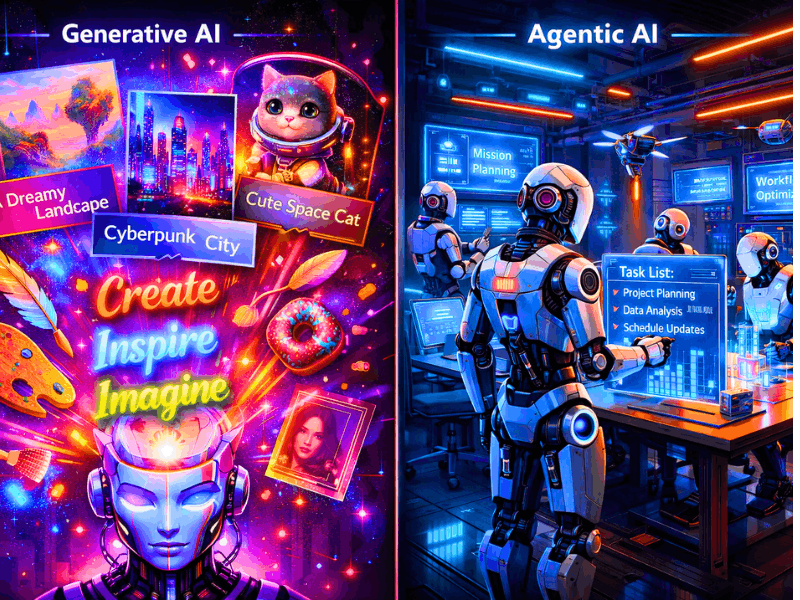
(While researching different career paths, I also noticed that enterprise companies are showing growing interest in agent-based systems.
These systems employ a number of AI agents that are capable of data analysis, communication, and the automation of intricate business processes without continuous human guidance.
Professionals are contrasting two distinct learning paths as a result of this change: Agentic AI system design against generative AI abilities.
This comparison naturally leads to the bigger question—Agentic AI vs. Generative AI: Which course has a higher salary in 2026, and which one offers stronger career stability in the evolving AI job market.
Generative AI: What is it?
Artificial intelligence systems that can produce new text, images, code, or videos in response to user commands are known as generative AI. These models produce outputs that resemble those of humans after learning patterns from huge datasets.
I was shocked by how quickly AI tools could produce ideas or create articles when I first explored with them. That experience made me curious about the bigger debate: Agentic AI vs. Generative AI: Which course has a higher salary in 2026.
Because generative AI seems more approachable and useful, many novices begin their AI adventure with it.
Important Technologies for Generative AI
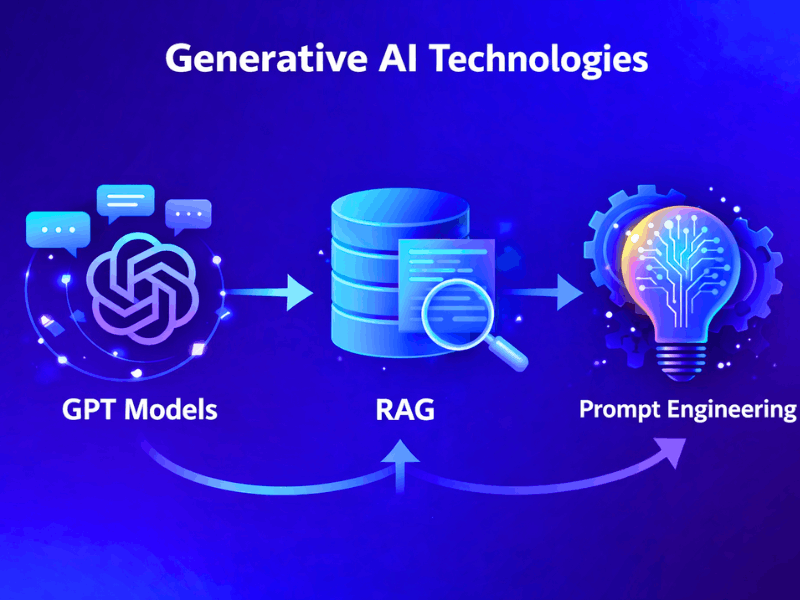
A number of potent technologies that enable machines to comprehend and create content make generative AI possible.
GPT models, which are big language models trained on enormous datasets to produce replies that like those of a human, are among the most significant.
(While investigating AI learning platforms, I also learned that the debate between Prompt Engineering and Agent Architecture is growing in significance. Prompt engineering teaches how to guide AI responses effectively, which is a core skill in Generative AI applications.)
Another key technology is Retrieval Augmented Generation (RAG). RAG connects AI models with external data sources so they can retrieve real-time information before generating answers.
(This combination of GPT models, RAG systems, and prompt engineering is why many learners compare Agentic AI vs. Generative AI: Which course has a higher salary in 2026, especially when deciding which AI specialization offers stronger long-term career opportunities.)
Popular Jobs Using Generative AI
Particularly in digital content, product creation, and AI-powered apps, generative AI has opened up a number of new career opportunities.
One typical position is that of an AI content creator, where experts use AI tools to effectively create blog entries, social media content, and marketing content.
(When I explored freelance platforms and job boards, I noticed that companies increasingly hire prompt engineers who specialize in designing prompts that improve AI responses and optimize model outputs.)
The position of AI product designer is another expanding one. To enhance user experience and automation, these experts incorporate Generative AI capabilities into apps, websites, and business solutions.
(Despite these opportunities, many professionals still ask the same question: Agentic AI vs. Generative AI: Which course has a higher salary in 2026, because long-term career growth often depends on how advanced the AI systems you can build actually are.)
Agentic AI: What is it?
Agentic AI is a more recent form of artificial intelligence in which machines may act, decide, and finish tasks without continual human guidance.
These systems are capable of organizing and carrying out tasks independently, rather than merely producing responses.
(When I first learned about Autonomous AI Agents, it felt very different from normal AI tools. These agents act in a manner similar to that of digital workers. Agentic AI vs. Generative AI: Which course has a greater income in 2026? is a common question because AI orchestration and multi-agent systems allow several agents to work together.)
Agentic AI Tools for the Real World
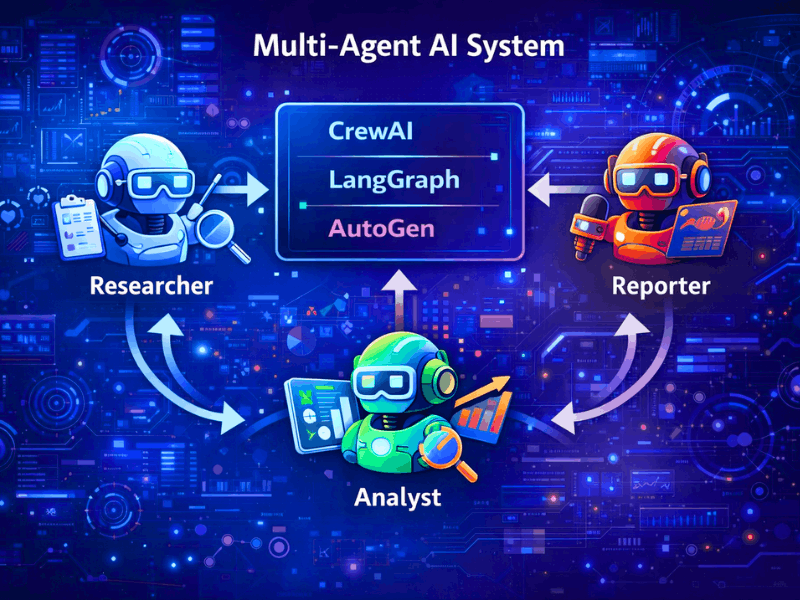
Developers employ specific frameworks made for building and controlling AI agents to create Agentic AI systems.
CrewAI is one tool that attracted my mind during my research. It enables developers to build cooperative teams of AI agents, which is similar to giving employees jobs in a business.
(One agent may conduct data research while another prepares reports, for instance. I became aware of how effective agent-based automation can be in practical applications after seeing this kind of system in action.)
LangGraph is another well-liked framework that aids developers in creating structured workflows in which AI agents interact and make judgments gradually.
Microsoft AutoGen is also widely used for building collaborative agent systems where multiple AI agents interact and solve complex tasks together.
(Seeing these tools in action made the discussion around Agentic AI vs. Generative AI: Which course has a higher salary in 2026 feel more practical, because companies clearly need experts who understand these advanced AI frameworks.)
How Agentic AI Automates Complex Workflows
Agentic AI is becoming more popular because of its capacity to automate complex procedures that often call for several workers.
This idea, known as “Agentic Workflow Automation,” involves many AI agents managing various phases of a work.
(I observed how one AI agent could gather data, another could analyze the findings, and a third could automatically create reports when I looked at a few demo projects. It was like to observing a small digital team work together.)
For business process automation, this kind of solution is quite helpful, particularly in sectors that handle a lot of data and repeated tasks.
Through multi-agent collaboration, each agent specializes in a different responsibility but communicates with others to complete the final objective.
(That’s exactly why many professionals are debating Agentic AI vs. Generative AI: Which course has a higher salary in 2026, because building these complex automation systems requires deeper technical expertise.)
Agentic AI vs Generative AI Salary Comparison
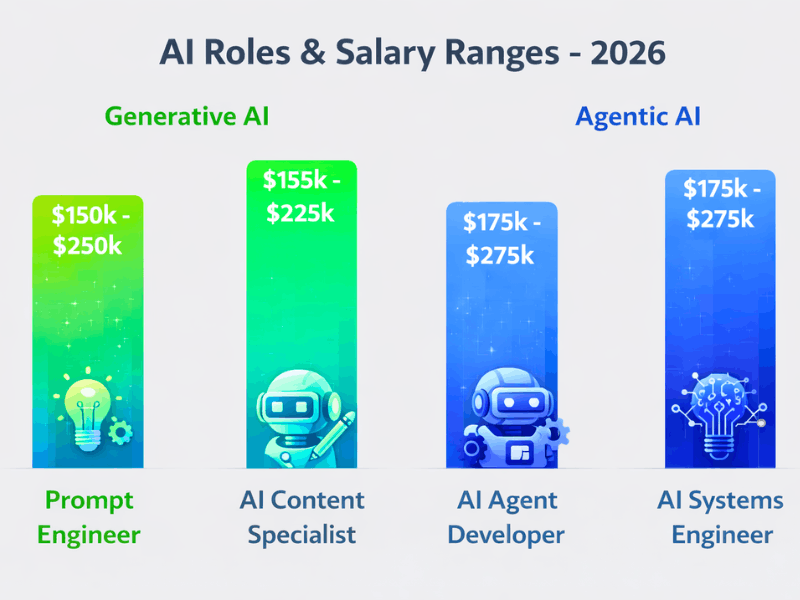
When people start learning artificial intelligence, salary potential becomes a major factor in choosing the right specialization.
The discussion around Agentic AI vs. Generative AI: Which course has a higher salary in 2026 is growing because both fields offer strong opportunities but require different levels of expertise.
(From my own research on AI career paths, I noticed that Generative AI jobs are increasing quickly, especially in marketing, content creation, and AI product development. However, Agentic AI roles are becoming valuable inside large tech companies because they involve building automation systems and intelligent agent architectures.)
One key difference appears in enterprise demand. Companies want AI tools that do more than generate text or images.
They want systems that can handle decision-making, workflow management, and automation across departments.
(That demand is pushing companies to hire professionals who understand Autonomous AI Agents, AI orchestration, and complex AI systems. Naturally, this shift is influencing the salary structure between different AI specializations.)
Here is a simple breakdown of the skill-based pay gap that many industry reports and job listings suggest.
Generative AI Roles
- Prompt Engineer
- AI Content Specialist
- AI Product Designer
- AI Automation Consultant
Average salary range often depends on experience and location, but many professionals earn competitive income by building AI-powered applications or optimizing prompts.
(When I checked freelance marketplaces and job boards, I noticed that Generative AI jobs are easier to enter, but competition is also increasing quickly.)
Agentic AI Roles
- AI Agent Developer
- AI Systems Engineer
- AI Automation Architect
- AI Infrastructure Engineer
These roles usually require stronger programming skills, system design knowledge, and understanding of multi-agent architectures.
(That deeper technical requirement is why many experts believe the debate Agentic AI vs. Generative AI: Which course has a higher salary in 2026 will increasingly favor Agentic AI for long-term enterprise careers.)
Another important factor is the projected AI Architect Salary 2026.
AI architects who design complex automation platforms and agent-based systems often command significantly higher compensation because they influence company-wide AI strategy.
(In simple terms, the more complex and scalable the AI systems you can build, the higher the potential salary tends to become.)
Entry-Level vs Senior AI Developer Salary
Experience level has a significant impact on salary disparities as well.
In order to grasp the principles of machine learning, prompt engineering, and AI application development, newcomers to the AI field frequently begin in junior positions.
(When I spoke with a few developers in online AI communities, many mentioned that the first job is usually about gaining real project experience rather than earning the highest salary immediately.)
Building small AI applications, testing prompts, and integrating APIs are some of the activities that a junior AI engineer or entry-level developer might concentrate on. Although they typically have modest starting pay, these positions offer a strong foundation.
As professionals gain deeper knowledge in AI system design, they can transition into more advanced roles.
A Senior AI Architect typically designs large-scale AI systems, manages automation workflows, and leads engineering teams.
(This experience gap explains the major salary difference between junior developers and senior architects, which is another reason people are asking Agentic AI vs. Generative AI: Which course has a higher salary in 2026, especially when planning a long-term AI career path.)
Why Companies Are Investing More in Agentic AI
Many companies are now shifting their AI strategy toward automation instead of simple content generation.
Generative AI tools are useful, but businesses want systems that can actually manage tasks, analyze information, and make operational decisions.
While researching enterprise AI projects, I noticed that companies care a lot about AI ROI (Return on Investment).
If an AI system can reduce manual work, improve speed, and lower operational costs, businesses see it as a long-term investment.
Agentic AI fits perfectly into this goal because it focuses on enterprise AI systems that can coordinate multiple tasks automatically.
Organizations may automate tasks like internal reporting, customer service operations, and data analysis when intelligent agents collaborate.
(This type of automation benefit is why many industry experts believe the debate Agentic AI vs. Generative AI: Which course has a higher salary in 2026 is becoming more relevant for career planning.)
Businesses are more interested in entire AI ecosystems than in individual AI solutions, based on what I saw while researching AI market trends.
(That shift explains why professionals who understand agent-based systems and automation frameworks are increasingly valuable in the discussion around Agentic AI vs. Generative AI: Which course has a higher salary in 2026.)
Future-Proof AI Skills in 2026
Building scalable AI systems is a talent that is still valuable in the ever changing AI sector.
My own educational experience has shown me that one of the most crucial future AI skills will be comprehending AI agent design.
It takes more than just simple commands to design intelligent bots. Developers need to comprehend how agents engage with tools, organize tasks, and communicate.
System thinking is another crucial ability.
This entails comprehending how various elements—AI models, databases, APIs, and automation tools—combine to form a comprehensive AI solution.
Automation architecture experts are able to create AI systems that manage entire workflows rather than simply individual jobs.
(That’s why many experts suggest focusing on deeper engineering skills when evaluating Agentic AI vs. Generative AI: Which course has a higher salary in 2026, because advanced system design knowledge often leads to stronger long-term career stability.)
Which Course Should You Choose?
To be honest, your job goal and level of interest in the technology will determine which AI course is best for you.
When I first started looking at AI learning options, I saw that a lot of introductory courses mainly emphasize generative AI because the tools are simple to use and the results show up fast.
However, after reading course evaluations and looking through job postings, I came to an intriguing realization.
A lot of lucrative AI certifications are gradually shifting to more complex subjects like agent-based development, system architecture, and AI automation.
I have noticed how rapidly the demand for courses is shifting.
Because they cover prompt engineering, AI content tools, and AI product creation, generative AI courses continue to be quite popular.
But engineers are also paying more attention to more recent courses on automation architecture and AI agents.
(This is why many learners keep searching Agentic AI vs. Generative AI: Which course has a higher salary in 2026, because choosing the right specialization today could strongly influence future career growth in the AI industry.)
Final Verdict: Which AI Course Pays More?
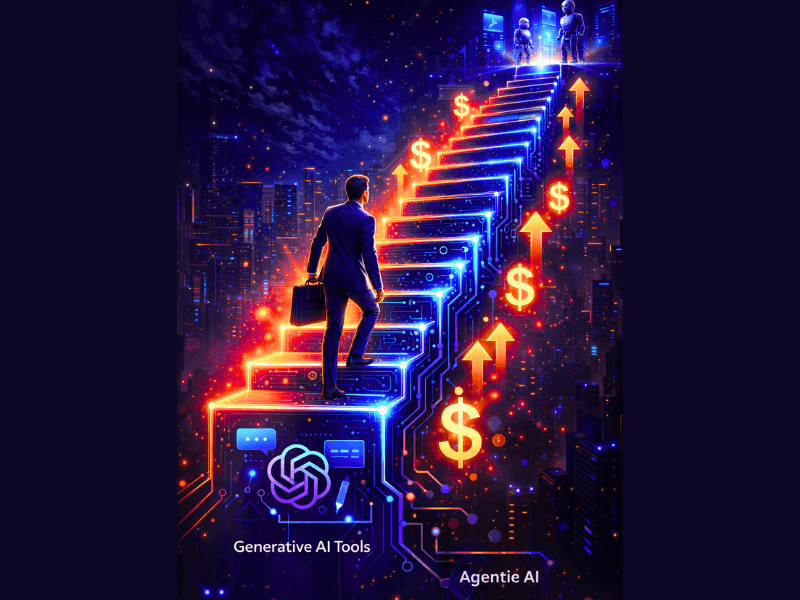
Salary possibilities typically follow the abilities that generate the greatest value for businesses, and the AI field is rapidly changing.
Both Generative AI and Agentic AI provide excellent job prospects, according to current AI income trends, although their long-term trajectories are rather different.
Because generative AI emphasizes useful tools, speedy engineering, and product integration, it’s a great way to get started in the AI industry.
However, the development of intricate automation systems and enterprise-level AI platforms is increasingly dependent on Agentic AI.
(From what I’ve personally observed while researching AI careers and courses, industry demand is slowly moving toward professionals who can design intelligent systems, not just operate AI tools.)
That’s why many learners keep asking Agentic AI vs. Generative AI: Which course has a higher salary in 2026 when planning a future-proof career in artificial intelligence.
To be honest, I suggest learning the basics of generative AI first, then progressively advancing to agentic AI skills.
In the developing AI environment, this combination strengthens long-term job prospects and increases earning potential.
Frequently Asked Questions
1. Is learning Agentic AI worth it in 2026?
Because businesses need automation systems and autonomous AI agents more and more, mastering Agentic AI is worthwhile. Agent-based skills frequently result in increased company demand and better long-term career progression, according to the debate Agentic AI vs. Generative AI: Which course has higher salary in 2026.
2. Difference between Generative AI and Agentic AI jobs
While agentic AI jobs encompass AI orchestration, multi-agent systems, and workflow automation, generative AI occupations concentrate on content creation, prompt engineering, and AI applications. When comparing Agentic AI vs. Generative AI: Which course has a higher salary in 2026, agentic roles typically call for more in-depth technical knowledge.
3. Which AI course has the best job placement in 2026?
There is now good job placement potential for courses on advanced AI systems, automation architecture, and AI agents. While understanding both basics is advised by many experts debating Agentic AI vs. Generative AI: Which course has a higher salary in 2026, enterprise demand for agent-focused courses is rising.
4. Highest paying AI programming languages in 2026
Python, Julia, Rust, and JavaScript are the most lucrative programming languages for AI systems and automation tools. Python continues to be the most useful language for AI agents, machine learning, and advanced AI development in the context of Agentic AI vs. Generative AI: Which course has a greater income in 2026.
1 thought on “Agentic AI vs. Generative AI: Which Course Guarantees a Higher Salary in 2026?”